Guide · Learn Kitesurfing
Learn Kitesurfing in Koh Samui: Beginner's Guide
Short answer
You can learn kitesurfing on Koh Samui from zero. Lessons start with theory and safety on the beach, then kite control in the water, body dragging, self-rescue and finally water starts and first rides. We recommend a 6-hour first course (฿14,400 private), usually split into two 3-hour sessions. Progress is individual, so nobody can promise riding after a fixed number of hours.
How learning to kitesurf works
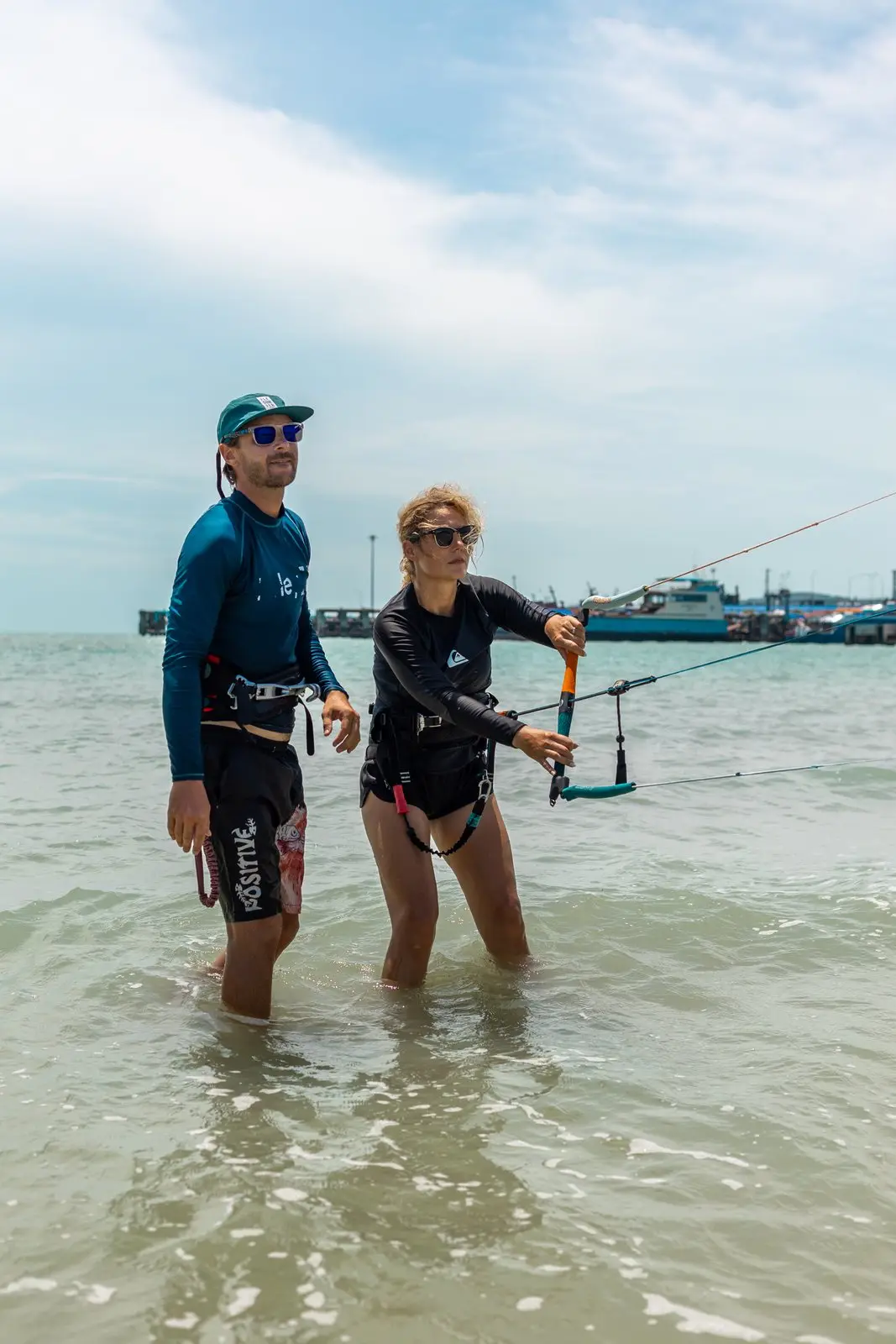
Kitesurfing is learned in stages. Each one builds a skill you need for the next, and your instructor decides with you when you are ready to move on. Mahalo has taught on Koh Samui since 2018, and the order below is the one we use for beginners. Lessons usually last 2–3 hours.
| Stage | What you work on |
|---|---|
| 01 · Wind, Equipment & Safety | Read the wind, get to know your equipment and learn how to stop everything safely. |
| 02 · First Kite Control | Learn to steer a full-size kite and manage its power, with your instructor beside you. |
| 03 · Body Dragging & Water Skills | Let the kite pull you through the water and learn what to do when something goes wrong. |
| 04 · Waterstarts & First Rides | Bring the kite and the board together and work towards your first controlled rides. |
| 05 · Riding Upwind & Independence | Hold your ground, change direction and build the judgement to ride within your limits. |
Every rider progresses differently. Your lessons follow your skills, confidence and the conditions on the day — not a fixed timetable. Riders who are already independent can continue with jumps and further progression.
Safety first, on the beach
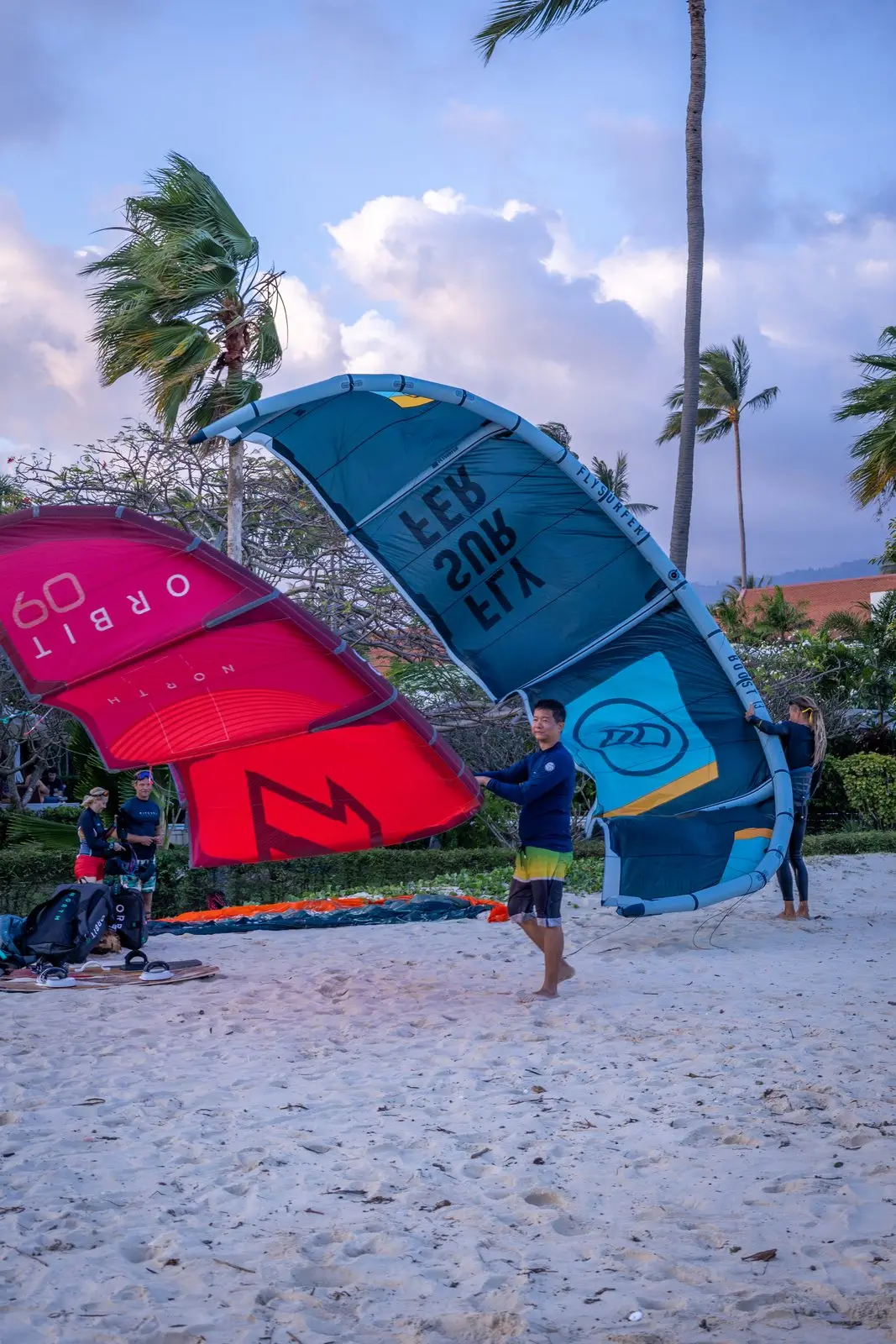
Before the kite goes up, you learn how to read the wind, what the wind window is, how to assess the spot and how to set up the kite, lines and bar. You put on and adjust the harness, and you learn the safety systems, including the quick release. This part happens on the beach with the equipment in front of you.
Kite control in the water
At Mahalo, kite control is practised in the water from the start, with a full-size kite and your instructor beside you. You learn to steer with one and two hands, to position the kite in the wind window and to build and reduce power. Practising in the water means you get used to the real feeling of the pull in a safe, forgiving place.
Body dragging and upwind body drag
Without a board, you let the kite pull you through the water. Body dragging makes kite control automatic, because you have to steer while your body moves. You learn to drag downwind first, then upwind, to change direction and to recover your board when you lose it. The upwind body drag is especially useful: it is how you get back to your board on your own.
You also practise self-rescue and what to do when something does not go to plan. These skills are part of learning to ride, not an extra.
Water starts and first rides
The water start puts everything together: board position, feet in the straps, body position and a controlled kite movement. For many students it is the hardest step, and progress here is very individual. We explain why in detail in How to waterstart: why beginners struggle.
Once you are up, the first rides are about staying balanced and controlling your speed.
Learning to ride upwind
Your first rides usually take you downwind. Riding upwind, so you can come back to where you started, is the next big goal, along with turns. This is where 2-hour coaching sessions work well: short, focused practice with feedback on one thing at a time.
Private or semi-private?
| Private | Semi-private | |
|---|---|---|
| Students | 1 student, 1 instructor | 2 students, 1 instructor |
| Equipment | 1 set, all yours | 1 set, used in turns |
| Best for | The most practice time and the fastest feedback | Friends or couples who want to learn together |
| 6 hours | ฿14,400 | ฿10,500 per person (฿21,000 for two) |
All course prices are on the Prices page.
Why 6 hours is a good first course
A six-hour course gives you room to work on the foundations at a sensible pace: safety and theory, kite control in the water, body dragging and self-rescue. How far you get depends on you and on the conditions on the day. It is also a natural point to decide whether to continue with the 9-hour or 12-hour courses, which have better prices than buying single hours.
If you only want a first taste, the 3-hour One-Day Discovery Session is a short introduction you can build on later. See all courses on Kitesurfing Lessons.
What to bring
- Swimwear and a towel
- Water-resistant sunscreen, ideally reef-friendly
- Drinking water
- A rash guard, if you have one
- Inexpensive sunglasses with a secure strap (optional)
We recommend travel or sports insurance that explicitly covers kitesurfing. Tell your instructor about any injuries or health issues before the first lesson. And plan your trip with a little flexibility, as explained in planning a kitesurfing holiday.
FAQ
Can I learn kitesurfing with no experience?
Yes. Our beginner course starts from zero, with theory and safety on the beach and kite control in the water. Board-sport experience can help, but it is not required.
How many hours does it take to learn kitesurfing?
There is no fixed number. It depends on the conditions, your fitness, your confidence in the water and any board-sport experience. We recommend starting with 6 hours and deciding on more once you see your progress.
Do I need to be fit or strong?
You do not need to be an athlete. The harness takes most of the pull, and technique matters more than strength. You should feel comfortable in the water and ready for a few active hours in the sun.
Is equipment included in the lesson?
Yes. Complete kitesurfing equipment for the lesson is included: kite, bar and lines, harness and board.
When will I ride on my own?
We do not promise independent riding after a set number of hours. Your instructor tells you honestly where you are after each lesson and what to work on next.